| News and UPSC Portal
  • Subjects
    • Biology
      • Cell – Structure and Function
      • Reproduction and Heredity
      • Population Problems and Control
      • Defence Mechanisms in the Body
      • Nutrition and Digestive System
      • Respiratory System
      • Circulatory System in Humans
      • Nervous System of Humans
    • Philosophy Optional
      • Indian Philosophy
      • Philosophy of Religion
      • Social Political Philosophy
      • Western Philosophy
    • Economy
    • Polity
    • Art and Culture
    • Environment
    • History
      • Ancient India History
      • Medieval India History
      • Modern India History
      • World History
      • Post Independence India
    • Geography
      • Physical Geography
      • Indian Geography
      • World Geography
      • Geography by Maps
    • IR & Security
    • Ethics & Essay
    • Social Issues
    • Sci-Tech
  • Current Affairs
    • Current Affairs For UPSC (Daily)
    • Current Affairs For UPSC (Weekly)
  • Trending Topics
  • Prelims & Mains
  • Yojana | PIB | Kurukshetra
  • Test Series
    • MCQ
  • Books
  • Exam Info
  • Contact
    • About us
    • Advertise with us
    • Disclaimer
    • Privacy Policy
| News and UPSC Portal
  • Subjects
    • Biology
      • Cell – Structure and Function
      • Reproduction and Heredity
      • Population Problems and Control
      • Defence Mechanisms in the Body
      • Nutrition and Digestive System
      • Respiratory System
      • Circulatory System in Humans
      • Nervous System of Humans
    • Philosophy Optional
      • Indian Philosophy
      • Philosophy of Religion
      • Social Political Philosophy
      • Western Philosophy
    • Economy
    • Polity
    • Art and Culture
    • Environment
    • History
      • Ancient India History
      • Medieval India History
      • Modern India History
      • World History
      • Post Independence India
    • Geography
      • Physical Geography
      • Indian Geography
      • World Geography
      • Geography by Maps
    • IR & Security
    • Ethics & Essay
    • Social Issues
    • Sci-Tech
  • Current Affairs
    • Current Affairs For UPSC (Daily)
    • Current Affairs For UPSC (Weekly)
  • Trending Topics
  • Prelims & Mains
  • Yojana | PIB | Kurukshetra
  • Test Series
    • MCQ
  • Books
  • Exam Info
  • Contact
    • About us
    • Advertise with us
    • Disclaimer
    • Privacy Policy

Browsing Category

Physical Geography

21 posts

Physical Geography of India

India’s physical geography is marked by diverse landscapes, from the towering mountains in the north to vast plains, plateaus, deserts, and extensive coastlines. This diversity is influenced by a combination of geological processes, climate patterns, and topography. Let’s explore India’s physical geography in detail:

1. The Himalayas

The Himalayas are the most significant mountain range in India, stretching across the northern border. These mountains are the youngest and highest in the world, extending across five countries: India, Nepal, Bhutan, China, and Pakistan. The range plays a crucial role in shaping the climate of India and acts as a barrier, separating the Indian subcontinent from the rest of Asia.

  • Key Features: The Himalayas include some of the highest peaks in the world, such as Mount Everest (8,848 meters), Kanchenjunga (8,586 meters), and Nanda Devi (7,816 meters).
  • Impact: They influence the Indian climate, especially the monsoons, and provide the source of many major rivers, including the Ganga, Yamuna, and Brahmaputra.

2. The Indo-Gangetic Plains

The Indo-Gangetic Plains are a vast and fertile region formed by the alluvial deposits of rivers originating from the Himalayas. These plains stretch across northern India, covering states like Punjab, Uttar Pradesh, Bihar, and West Bengal. The plains are characterized by fertile soil, making them some of the most productive agricultural regions in the world.

  • Rivers: The Ganga, Yamuna, Ghaghara, and Brahmaputra flow through this region, enriching the soil.
  • Climate: The region experiences a subtropical climate, with hot summers, a monsoon season, and mild winters.
  • Agriculture: The plains support the cultivation of crops like rice, wheat, sugarcane, and pulses.

3. The Thar Desert

Located in the northwest of India, the Thar Desert is one of the largest deserts in the world. It spans parts of Rajasthan, Punjab, and Gujarat, and extends into Pakistan. The desert features sand dunes, rocky terrain, and minimal vegetation, yet it supports a variety of life and human settlements.

  • Climate: The desert experiences extreme temperatures—hot in summer and cold in winter. The region receives very little rainfall, making it arid and dry.
  • Flora and Fauna: Despite the harsh conditions, the desert is home to species like the Indian camel, desert fox, and caracal.

4. The Deccan Plateau

The Deccan Plateau is a large, elevated region located in southern India. It is bounded by the Western Ghats on the west and the Eastern Ghats on the east. The plateau is made of ancient volcanic rocks, rich in minerals, and has a generally flat or gently sloping terrain.

  • Key Features: The plateau is home to several rivers like the Godavari, Krishna, and Kaveri, which are crucial for irrigation and agriculture.
  • Climate: The climate here varies from tropical in the lower regions to temperate in the higher regions, with distinct wet and dry seasons.

5. The Western Ghats and Eastern Ghats

The Western Ghats and Eastern Ghats are two mountain ranges that run parallel to the western and eastern coasts of India, respectively.

  • Western Ghats: Also known as the Sahyadri, these mountains extend from the Gujarat coast down to Tamil Nadu in the south. They are a UNESCO World Heritage site due to their rich biodiversity, with many endemic species of plants and animals.
  • Eastern Ghats: These are older and more fragmented than the Western Ghats, extending from Odisha to Tamil Nadu. They are lower in elevation but have significant ecological value.

6. The Coastal Plains

India has an extensive coastline that is divided into two coastal plains: the Western Coastal Plain and the Eastern Coastal Plain.

  • Western Coastal Plain: This region lies along the Arabian Sea and includes states like Goa, Maharashtra, and Kerala. The terrain is narrow but has several important ports, including Mumbai, Kochi, and Mangalore.
  • Eastern Coastal Plain: This plain stretches along the Bay of Bengal and includes states like Tamil Nadu, Andhra Pradesh, and Odisha. The region has fertile deltas, such as the Kaveri Delta, supporting agriculture.

7. The Islands

India has two major island groups: the Andaman and Nicobar Islands in the Bay of Bengal and the Lakshadweep Islands in the Arabian Sea.

  • Andaman and Nicobar Islands: These islands are known for their tropical climate, rich biodiversity, and unique indigenous tribes. They are an archipelago of more than 500 islands.
  • Lakshadweep Islands: Located off the western coast, these islands are known for their coral reefs, lagoons, and marine life.

8. Rivers of India

India is home to numerous rivers that shape its physical geography, support agriculture, and provide water resources.

  • The Ganga: Originating from the Himalayas, it is one of the longest rivers in India and holds religious significance. It flows through several states, including Uttarakhand, Uttar Pradesh, Bihar, and West Bengal.
  • The Yamuna: The second-largest river in northern India, flowing through Delhi and Uttar Pradesh, it is a tributary of the Ganga.
  • The Brahmaputra: Flowing from the Himalayas, it enters India in Assam and contributes significantly to the floodplains of the northeastern region.
  • The Godavari, Krishna, and Kaveri: These rivers flow across the southern Indian states, supporting agriculture and providing water for drinking and irrigation.

9. Climate Zones of India

India experiences several climate zones due to its vast size and diverse topography.

  • Tropical Climate: Most of India, especially the central and southern regions, experiences a tropical climate with hot summers and a monsoon season.
  • Arid Climate: The Thar Desert in the northwest is characterized by extreme heat, limited rainfall, and arid conditions.
  • Temperate Climate: The Himalayas and some parts of the Deccan Plateau experience a temperate climate, with colder winters and moderate summers.

10. Natural Resources

India is rich in natural resources, including minerals, forests, water, and biodiversity.

  • Minerals: India has significant reserves of minerals such as coal, iron ore, bauxite, and mica. The Deccan Plateauis particularly rich in mineral deposits.
  • Forests: India’s forests are home to diverse species of flora and fauna, including the Sundarbans mangroves, tropical rainforests of the Western Ghats, and temperate forests of the Himalayas.
  • Water: The major rivers of India, like the Ganga, Yamuna, and Brahmaputra, provide crucial water resources for agriculture, drinking, and power generation.

Conclusion

India’s physical geography is one of the most diverse in the world, encompassing towering mountain ranges, fertile plains, vast plateaus, arid deserts, and lush coastal regions. This diversity in landscapes has contributed to India’s rich natural resources and varied ecosystems. Understanding India’s physical geography is key to comprehending its climate, agriculture, and the way people interact with their environment.

Mass movement and Groundwater
  • Physical Geography
  • 2.7K views
  • 3 minute read
  • One comment

Mass movement & Ground Water

  • IAS MANIA FAVICONAdmin
  • 30/05/2025
Mass movement & Ground Water Mass movement Movement of weathered material down the slope due to gravitational force Movement may be gradual or sudden depending on the gradient of the…
View Post
Weathering - Chemical + Physical + Biological
  • Physical Geography
  • 3.1K views
  • 3 minute read
  • One comment

Weathering – Chemical + Physical + Biological

  • IAS MANIA FAVICONAdmin
  • 30/05/2025
Weathering – Chemical + Physical + Biological Weathering The process of wearing away of earth’s surface is commonly known as denudation & is generally carried out in four phases Weathering,…
View Post
Volcanoes & its Types
  • Physical Geography
  • 8.5K views
  • 3 minute read
  • One comment

Volcanoes & its Types

  • IAS MANIA FAVICONAdmin
  • 29/05/2025
Volcanoes & its types Volcanoes A sudden & abrupt explosion in earth crust through which Magma, gases, dust, smoke & solid material burst out Volcanic activity is connected with crustal…
View Post
type of plains
  • Physical Geography
  • 4.0K views
  • 2 minute read
  • One comment

Type of Plains

  • IAS MANIA FAVICONAdmin
  • 28/05/2025
Type of Plains Plains Plains usually are the best land of a country & are heavily cultivated & populated Even more at places where rivers transverse the plains For ex:…
View Post
Mountains and Plateaus
  • Physical Geography
  • 3.7K views
  • 3 minute read
  • One comment

Mountains and Plateaus

  • IAS MANIA FAVICONAdmin
  • 28/05/2025
Mountains and Plateaus Mountains Part of land > 900 mts height With slope ~ 25 – 30* Mainly of four types viz. Fold Mountains Block Mountains Volcanic Mountains Residual /…
View Post
Formation of Continents - Continental Drift Theory & Plate Tectonics
  • Physical Geography
  • 5.7K views
  • 2 minute read
  • 2 comments

Formation of Continents – Continental Drift Theory & Plate Tectonics

  • IAS MANIA FAVICONAdmin
  • 28/05/2025
Formation of Continents – Continental Drift Theory & Plate Tectonics Wagner’s Continental Drift Theory Proposed by Alfred Wegner in 1912 Also known as Jigsaw Fit Theory 1st to propound movement…
View Post
Igneous Rocks, Sedimentary Rocks, Metamorphic Rocks
  • Physical Geography
  • 4.2K views
  • 3 minute read
  • 3 comments

Igneous Rocks, Sedimentary Rocks, Metamorphic Rocks

  • IAS MANIA FAVICONAdmin
  • 28/05/2025
Igneous Rocks, Sedimentary Rocks, Metamorphic Rocks Rocks > Material that form crust of earth Igneous Rocks Formed through cooling & solidification of molten material magma (Erupted from volcanoes, molten material…
View Post
Layers of Earth, Composition & Earthquakes
  • Physical Geography
  • 2.7K views
  • 4 minute read
  • 2 comments

Layers of Earth, Composition & Earthquakes

  • IAS MANIA FAVICONAdmin
  • 28/05/2025
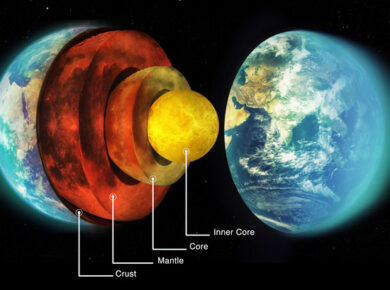
Layers of Earth, Composition & Earthquakes Generally speaking, Earth has 4 layers > the outer crust that we live on, the plastic-like mantle, the liquid outer core, and the solid…
View Post
Hydrosphere - Movement of Oceanic Water
  • Physical Geography
  • 2.3K views
  • 6 minute read
  • 2 comments

Hydrosphere – Movement of Oceanic Water

  • IAS MANIA FAVICONAdmin
  • 27/05/2025
Hydrosphere – Movement of Oceanic Water Movement of Oceanic Water > Never Static Vertical Movement > Tides Horizontal Movement > Ocean waves & Ocean currents Tides Periodic rise & fall…
View Post
Hydrosphere - Albedo, Fresh Water, Salinity & Temperature
  • Physical Geography
  • 3.3K views
  • 3 minute read
  • 2 comments

Hydrosphere – Albedo, Fresh Water, Salinity & Temperature

  • IAS MANIA FAVICONAdmin
  • 27/05/2025
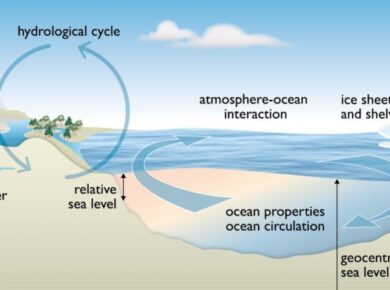
Hydrosphere – Albedo, Fresh Water, Salinity & Temperature  Water on Earth 71% of earth surface constitutes water & only 29% constitutes land area of earth 97% of water area constitutes…
View Post
Hydrosphere - Ocean Floor Division
  • Physical Geography
  • 2.9K views
  • 3 minute read
  • 2 comments

Hydrosphere – Ocean Floor Division

  • IAS MANIA FAVICONAdmin
  • 27/05/2025
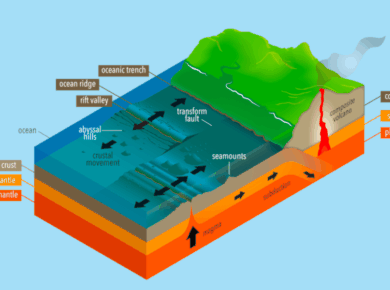
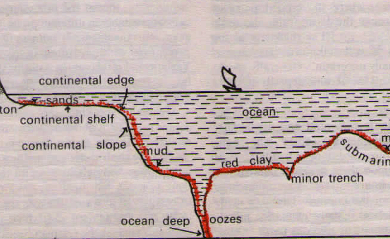
Hydrosphere – Ocean Floor Division Ocean Floor Division Continental Self Basically, the seaward extension of the continent from the shoreline to the continental edge approx. 200 m deep Continental shelf is…
View Post
Atmosphere - Weather and Climate
  • Physical Geography
  • 3.1K views
  • 7 minute read
  • 2 comments

Atmosphere – Weather and Climate

  • IAS MANIA FAVICONAdmin
  • 27/05/2025
Atmosphere – Weather and Climate Weather > Pertains to the condition of atmosphere at any place at a specific time or for a short period of time (Generally for hours…
View Post

Posts pagination

1 2 Next

No Coding Required – #1 Web Hosting


UPSC/IAS Exams Preparation Books

UPSC Exam Books

General
  • Current Affairs
  • General Knowledge
  • Daily Latest News
  • Cricket Update
  • Best Websites for UPSC Preparation
  • Best Hindi Newspaper for UPSC
Recommended Books for UPSC
  • Books for UPSC Preliminary Exams (Eng)
  • Books for UPSC Preliminary Exams (Hindi)
  • Books for UPSC Main Exam (Eng)
  • Books for UPSC Main Exam (Hindi)
  • Books & Tips to Crack UPSC Interview (Eng)
  • Books & Tips to Crack UPSC Interview (Hindi)
History
  • World History
  • Ancient India History
  • Medieval India History
  • Modern India History
  • Post Independence History
CURRENT AFFAIRS
  • Current Affairs (Monthly)
  • Current Affairs For UPSC (Weekly)
  • Current Affairs For UPSC (Daily)


IAS Mania Logo

Advertise With Us

SUBJECTS
  • Biology
  • Economy
  • Ethics & Essay
  • IR & Security
  • Philosophy Optional
  • Social Issues
  • Polity
  • History
  • Art and Culture
  • Environment
  • Sci-Tech
PRELIMS & MAINS
  • Prelims Exclusive – 2022
  • Prelims Exclusive – 2021
  • Prelims Exclusive – 2020
  • Prelims Exclusive – 2018 & 2019
  • Mains Eclusive – 2018 & 2019
BOOKS FOR UPSC PREPARATION
  • Books for UPSC Preliminary Exams (Eng)
  • Books for UPSC Preliminary Exams (Hindi)
  • Books for UPSC Main Exam (Eng)
  • Books for UPSC Main Exam (Hindi)
  • Books & Tips to Crack UPSC Interview (Eng)
  • Books & Tips to Crack UPSC Interview (Hindi)
0
UPSC IAS Preparation and News Platform

© 2025 IASmania | All Rights Reserved. Designed & Developed by ON Time Infotech