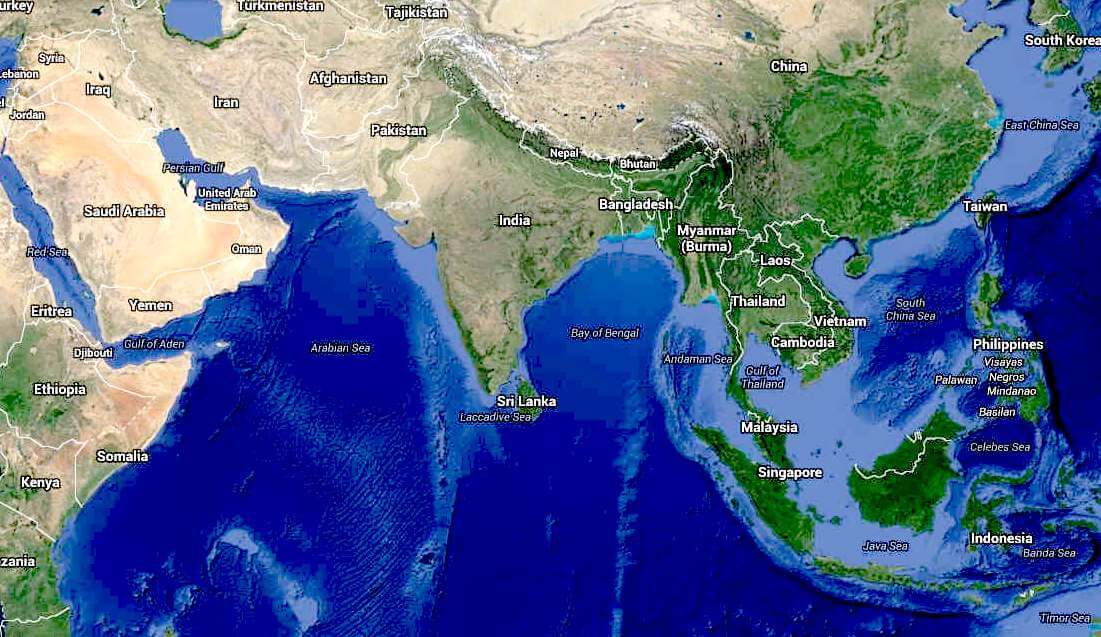
Bays, Gulf & Sea – India
| Gulf of Katchh |
|
| Gulf of Khambat |
|
| Gulf of Mannar |
|
| Palk Bay |
|
| Palk Strait |
|
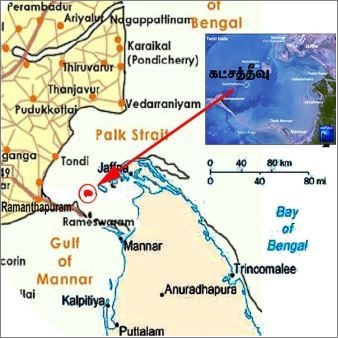
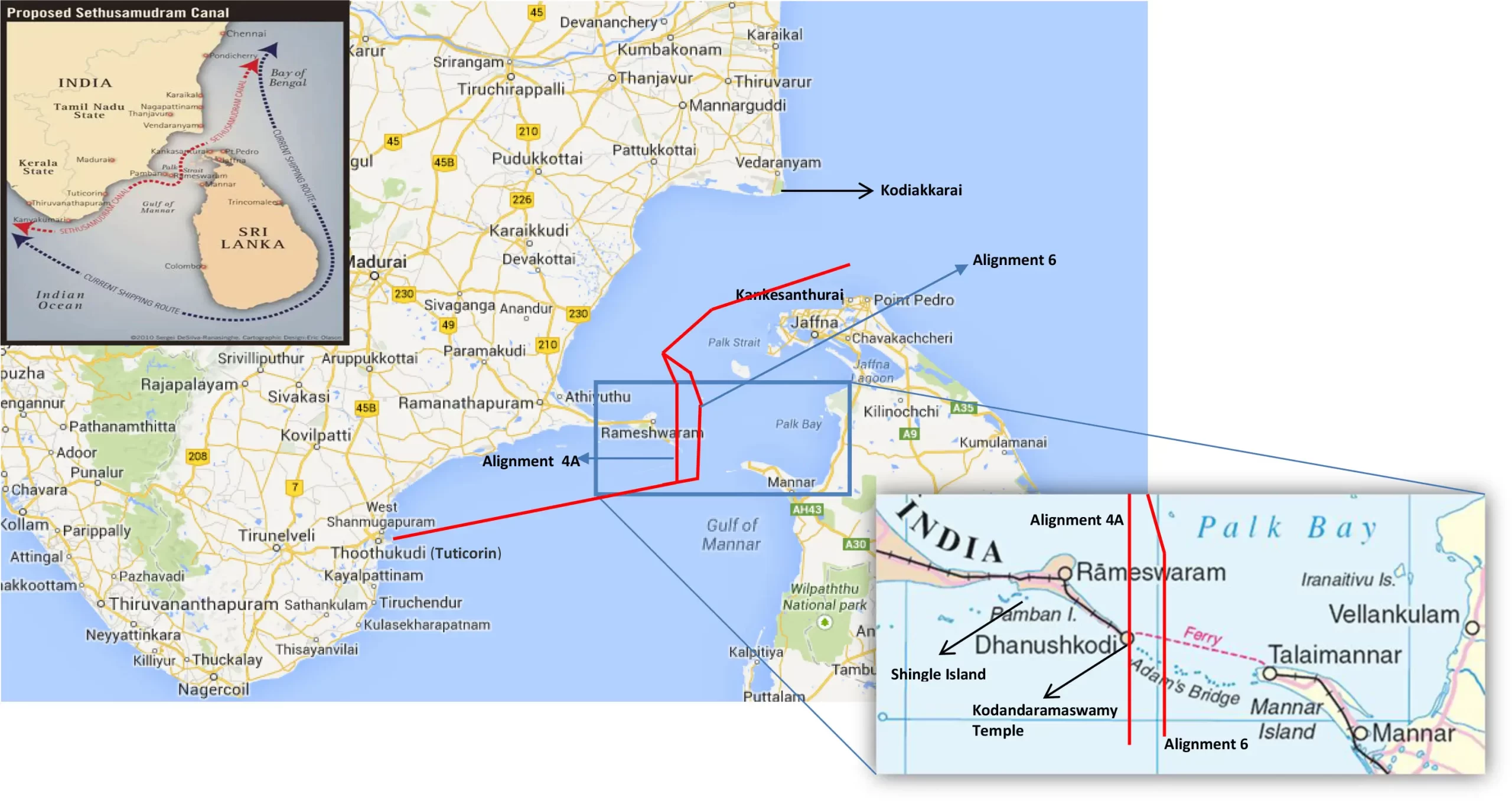
Adam’s Bridge/ Rama’s Bridge/ Rama Setu
- a chain of limestone shoals, between Pamban Island, also known as Rameswaram Island
- Lies off the south-eastern coast of Tamil Nadu, India, and Mannar Island, off the north-western coast of Sri Lanka
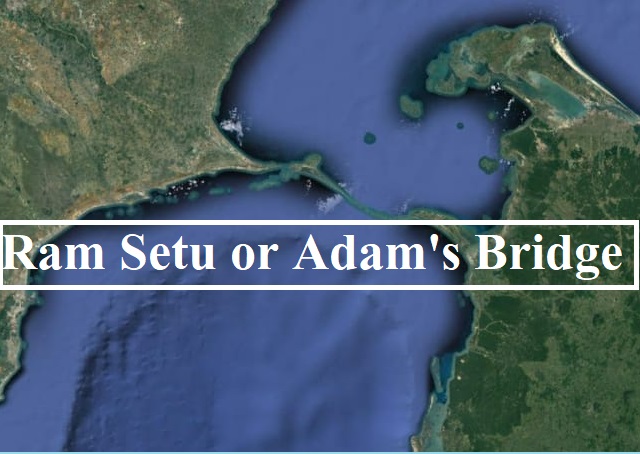
Sethusamudram Shipping Canal Project
- Would link Palk Bay & Gulf of Mannar b/w Tamilnadu & Sri Lanka
- By creating a shipping channel through the shallow sea called Sethusamudram via Ram Sethu.
Also read: Major Rivers in India
Famous Seas / Oceans of India
Bay of Bengal
- Bay of Bengal is bordered to the north by a wide continental shelf that narrows to the south and by slopes of varying gradient on the northwest, north, and northeast.
- Bay of Bengal has a distinct tropical marine ecosystem, and copious river drainage into the northern part of the bay and the profusion of wetlands, marshes, and mangroves increase productivity of nearshore fish species.
- Petroleum and natural-gas discoveries have been made in the Bay of Bengal, notably offshore of the Godavari and Manandi deltas.
- The principal trade routes for large tankers en route from the Persian Gulf to the Strait of Malacca pass south of the Bay of Bengal.
- Haldia, Vishakhapatnam, and Paradeep are well developed as iron ore terminals, reflecting India’s profitable exportation of raw materials.
Bay of Bengal Major Branches
- Chandipur & Gopalpur in Orissa
- Marina in Chennai
Arabian Sea
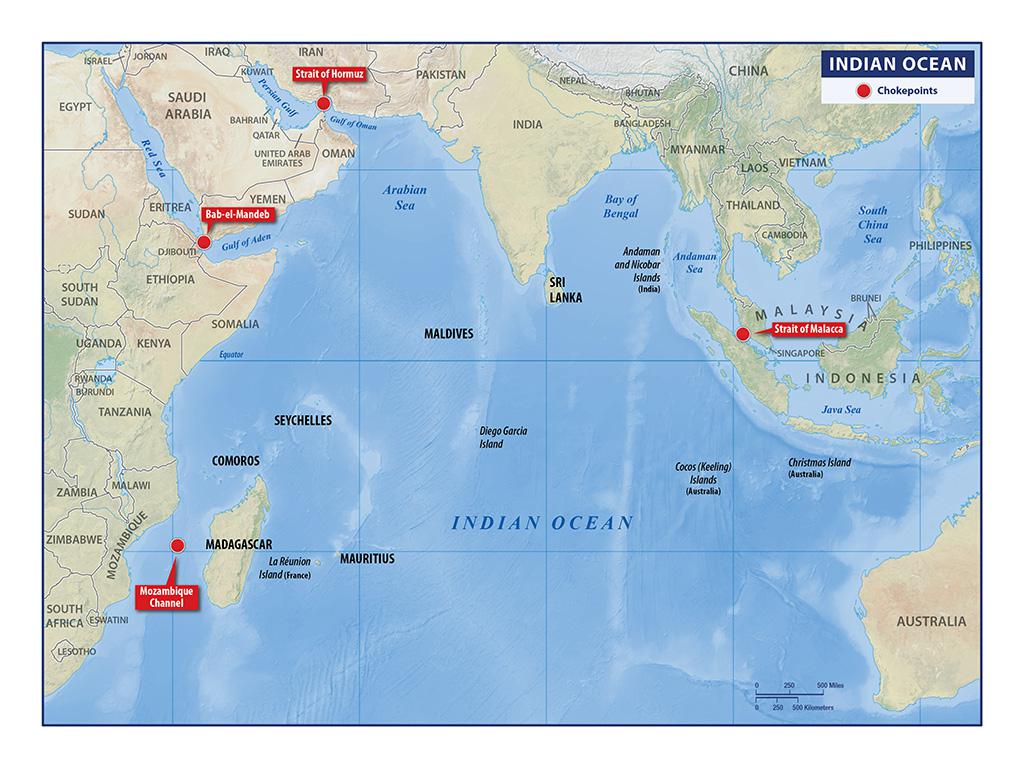
- The Arabian Sea is a region of the Indian Ocean bounded on the north by Pakistan and Iran, on the south by north-eastern Somalia, on the east by India and on the west by the Arabian Peninsula.
- The countries with coastlines on the Arabian Sea are Somalia, Djibouti, Yemen, Oman, Iran, Pakistan, India and the Maldives.
- The Arabian Sea has two important branches – the Gulf of Aden in the southwest, connecting with the Red Sea through the strait of Bab-el-Mandeb; and the Gulf of Oman to the northwest, connecting with the Persian Gulf.
- There are also the gulfs of Cambay and Kutch on the Indian coast.
- The Indus and the Narmada rivers are the principal waterways draining into the sea.
Arabian Sea Major Branches
- Mandavi, Dwarka & Chorwad in Gujrat
- Dahanu & Murad in Maharashtra
- Arambol & Karwar in Karnataka
- Kollam & Kovalam in Kerala
Indian Ocean
- Strategic significance > India overlooks some of the most important sea lanes viz. Suez Canal, Malacca Strait
- Economic significance > Long coastline, 2.02 million sq km EEZ (Exclusive economic zone)
- Tourism Significance > Marine biodiversity and rich ecosystem with coral reefs, mangroves
- Large Fishing potential, Wave energy & Tidal energy potential, Zone of Hydrocarbons
- Generation of south west Monsoon
✅ 5 Important Points on Bays, Gulfs & Seas of India:
-
India is surrounded by water on three sides, bordered by the Arabian Sea (west), Bay of Bengal (east), and the Indian Ocean (south), forming a vast coastline of over 7,500 km.
-
The Bay of Bengal is the largest bay in the world and receives water from major Indian rivers like the Ganga, Brahmaputra, Mahanadi, and Godavari, making its coast fertile and delta-rich.
-
The Arabian Sea is vital for India’s west coast trade, with major ports like Mumbai, Mangalore, and Kochi, and is calmer compared to the cyclone-prone Bay of Bengal.
-
Gulf of Kutch and Gulf of Khambhat in Gujarat are known for extreme tidal variations and host rich marine ecosystems and ports critical for industry and oil transport.
-
The Gulf of Mannar, located between Tamil Nadu and Sri Lanka, is a UNESCO Biosphere Reserve and one of the richest regions for marine biodiversity and coral reefs in India.
For more updates, explore the Geography . Feel free to share your thoughts and comments.
If you’re passionate about building a successful blogging website, check out this helpful guide at Coding Tag – How to Start a Successful Blog. It offers practical steps and expert tips to kickstart your blogging journey!

 Admin
Admin