| News and UPSC Portal
  • Subjects
    • Biology
      • Cell – Structure and Function
      • Reproduction and Heredity
      • Population Problems and Control
      • Defence Mechanisms in the Body
      • Nutrition and Digestive System
      • Respiratory System
      • Circulatory System in Humans
      • Nervous System of Humans
    • Philosophy Optional
      • Indian Philosophy
      • Philosophy of Religion
      • Social Political Philosophy
      • Western Philosophy
    • Economy
    • Polity
    • Art and Culture
    • Environment
    • History
      • Ancient India History
      • Medieval India History
      • Modern India History
      • World History
      • Post Independence India
    • Geography
      • Physical Geography
      • Indian Geography
      • World Geography
      • Geography by Maps
    • IR & Security
    • Ethics & Essay
    • Social Issues
    • Sci-Tech
  • Current Affairs
    • Current Affairs For UPSC (Daily)
    • Current Affairs For UPSC (Weekly)
  • Trending Topics
  • Prelims & Mains
  • Yojana | PIB | Kurukshetra
  • Test Series
    • MCQ
  • Books
  • Exam Info
  • Contact
    • About us
    • Advertise with us
    • Disclaimer
    • Privacy Policy
| News and UPSC Portal
  • Subjects
    • Biology
      • Cell – Structure and Function
      • Reproduction and Heredity
      • Population Problems and Control
      • Defence Mechanisms in the Body
      • Nutrition and Digestive System
      • Respiratory System
      • Circulatory System in Humans
      • Nervous System of Humans
    • Philosophy Optional
      • Indian Philosophy
      • Philosophy of Religion
      • Social Political Philosophy
      • Western Philosophy
    • Economy
    • Polity
    • Art and Culture
    • Environment
    • History
      • Ancient India History
      • Medieval India History
      • Modern India History
      • World History
      • Post Independence India
    • Geography
      • Physical Geography
      • Indian Geography
      • World Geography
      • Geography by Maps
    • IR & Security
    • Ethics & Essay
    • Social Issues
    • Sci-Tech
  • Current Affairs
    • Current Affairs For UPSC (Daily)
    • Current Affairs For UPSC (Weekly)
  • Trending Topics
  • Prelims & Mains
  • Yojana | PIB | Kurukshetra
  • Test Series
    • MCQ
  • Books
  • Exam Info
  • Contact
    • About us
    • Advertise with us
    • Disclaimer
    • Privacy Policy

Browsing Category

Modern India History

21 posts

Modern India History (1857–Present)

Modern Indian history is a tale of transformation, marked by the struggle for independence, social and political change, and the emergence of a nation on the world stage. The period from 1857 to the present has been shaped by colonial rule, the Indian independence movement, the partition, and post-independence developments. Let’s explore key events and phases that have defined modern India.

1. British Colonial Rule (1857–1947)

British colonial rule in India began in the early 17th century but became formalized under the British Crown after the Indian Rebellion of 1857, also known as the First War of Indian Independence or the Sepoy Mutiny. While the rebellion was unsuccessful, it marked the beginning of the end of direct Mughal and traditional Indian rule and the rise of a national consciousness.

a) The British East India Company

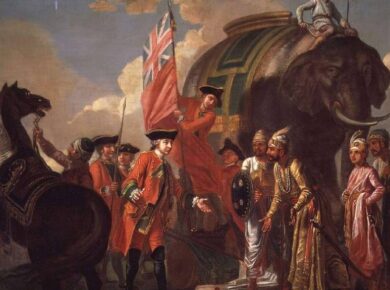
Before 1857, the British East India Company controlled most of India’s territories. The company was given control over trade, revenue collection, and law enforcement, leading to its widespread influence.

b) The 1857 Rebellion

The revolt of 1857 was a significant, though unsuccessful, uprising against British authority. Though primarily a military rebellion led by Indian soldiers (sepoys), it ignited widespread resentment against British rule. Following the revolt, the British government dissolved the East India Company and took direct control of India, marking the beginning of the British Raj.

2. National Awakening and Reform Movements (Late 19th Century)

In the late 19th century, India saw the rise of intellectual, social, and political reform movements aimed at improving society and challenging British colonial rule.

a) The Rise of Nationalism

The late 19th century saw the emergence of Indian nationalism, with movements like the Indian National Congress (INC), founded in 1885. Early leaders like Dadabhai Naoroji, Gopal Krishna Gokhale, and Lala Lajpat Raiadvocated for Indian rights and self-rule.

b) Social and Religious Reforms

Social reformers like Raja Ram Mohan Roy, Ishwar Chandra Vidyasagar, and Swami Vivekananda campaigned against social evils such as sati, child marriage, and caste discrimination. The Brahmo Samaj, Arya Samaj, and Theosophical Society played pivotal roles in promoting social change and modernizing Hinduism.

3. The Struggle for Independence (1900–1947)

The early 20th century was marked by the intensification of the Indian independence movement, which sought to rid India of British colonial rule.

a) The Partition of Bengal (1905)

In 1905, the British partitioned Bengal, one of the most significant regions in India, to divide and rule. The move angered Indian nationalists and led to widespread protests. The partition was reversed in 1911, but the event played a crucial role in galvanizing the independence movement.

b) The Rise of Gandhian Leadership (1915–1947)

Mahatma Gandhi emerged as a central figure in the Indian independence movement after returning to India from South Africa in 1915. Gandhi’s philosophy of non-violence (ahimsa) and civil disobedience led to mass movements and protests across India.

  • Champaran (1917): Gandhi led the Champaran movement in Bihar, where he successfully fought for the rights of indigo farmers who were being exploited by British planters.
  • Non-Cooperation Movement (1920–1922): Gandhi called for a boycott of British goods, services, and institutions, which saw widespread support across India.
  • Salt March (1930): In 1930, Gandhi led the famous Salt March to protest the British monopoly on salt production and taxes. This act of civil disobedience galvanized the entire nation.
  • Quit India Movement (1942): As World War II intensified, Gandhi and the INC demanded an immediate end to British rule. Despite massive arrests, the movement highlighted India’s demand for independence.

4. Independence and Partition (1947)

After decades of struggle, India gained independence on August 15, 1947, but the victory was marred by the tragic Partition of India into two nations: India and Pakistan. The partition led to widespread communal violence, mass migration, and the loss of countless lives. The division was based on religious lines, with Pakistan becoming a Muslim-majority nation and India remaining secular with a Hindu majority.

  • Jawaharlal Nehru, the first Prime Minister of India, became the face of the new nation, guiding the country through its early years of independence.
  • Sardar Vallabhbhai Patel, as the first Deputy Prime Minister and Home Minister, played a crucial role in integrating the princely states into the Indian Union.

5. Post-Independence India (1947–Present)

Since independence, India has undergone dramatic political, economic, and social changes.

a) The Constitution of India (1950)

On January 26, 1950, India adopted its Constitution, making it a republic. The Constitution, drafted by Dr. B.R. Ambedkar and the Constituent Assembly, is the longest written constitution in the world. It provided for a democratic system of governance, guaranteeing fundamental rights to citizens.

b) Early Years of Independence (1947–1960s)

In the first two decades after independence, India focused on nation-building, economic development, and social reforms. Nehru’s vision of a mixed economy led to the creation of public sector industries and five-year plans for economic growth. The Indian National Congress (INC) dominated the political scene during this period.

  • Green Revolution: In the 1960s and 1970s, the Green Revolution led to an increase in agricultural productivity, especially in Punjab and Haryana.
  • China-India War (1962): India’s relations with China soured in 1962, leading to a short but impactful border war.

c) Economic Liberalization (1991)

In 1991, under Prime Minister P.V. Narasimha Rao and Finance Minister Dr. Manmohan Singh, India embarked on a major economic liberalization process. This included devaluing the rupee, reducing import tariffs, and opening up the Indian economy to foreign investments. The reforms have had a profound impact, leading to rapid economic growth, the expansion of the technology sector, and India’s integration into the global economy.

d) Political Landscape

India has witnessed multiple shifts in political power, with the INC ruling for several decades after independence. Over time, regional parties, coalitions, and new political forces like the BJP (Bharatiya Janata Party) have gained prominence.

  • The BJP, led by figures like Atal Bihari Vajpayee and Narendra Modi, emerged as a dominant force in Indian politics in the late 20th and early 21st centuries.
  • India continues to be a democracy with regular elections, a multi-party system, and a vibrant civil society.

e) Social and Cultural Changes

India has undergone significant social and cultural transformation since independence.

  • Caste and Social Reforms: The Indian government has worked to abolish untouchability and promote social equality through affirmative action policies (reservations). However, caste-based discrimination still exists in some parts of the country.
  • Women’s Rights: There has been progress in women’s rights, with laws ensuring gender equality, but challenges like violence against women and limited access to education and healthcare remain.
  • Technological Advancements: India has emerged as a global hub for information technology (IT), with cities like Bengaluru becoming known as “Silicon Valley of India.”

f) Challenges and Future Prospects

India faces several challenges as it moves forward into the 21st century:

  • Poverty and Inequality: Despite progress, poverty remains widespread, and economic disparities persist between urban and rural areas.
  • Environmental Concerns: India faces significant environmental challenges, including air pollution, water scarcity, and deforestation.
  • Geopolitical Issues: India’s relationship with its neighbors, especially Pakistan and China, remains complex, and security concerns persist.

Conclusion

Modern India’s history is a tale of remarkable transformation, from colonial oppression to independence, and from a newly independent nation struggling with social and economic challenges to a global player with a rapidly growing economy. India’s journey is a complex one, marked by both triumphs and struggles, and its future will continue to shape the global landscape.

Indian Independence Act
  • Modern India History
  • 11.3K views
  • 3 minute read
  • One comment

Cabinet Mission, Plan Balkan, Mountbatten Plan & Indian Independence Act of 1947

  • IAS MANIA FAVICONAdmin
  • 13/05/2025
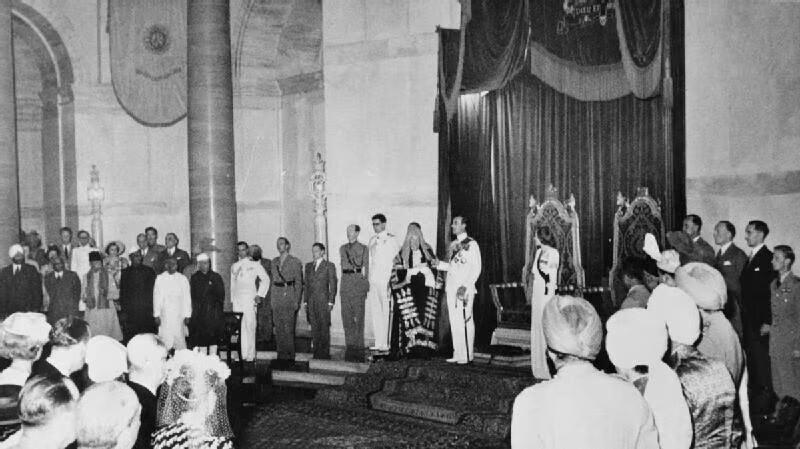
Cabinet Mission, Plan Balkan, Mountbatten Plan & Indian Independence Act of 1947 Cabinet Mission (1946) On 15 March, 1946 Lord Atlee (PM of England) made a historic announcement in which…
View Post
  • Modern India History
  • 3.6K views
  • 2 minute read
  • One comment

Rajgopalachari Formula, Desai-Liaqat Pact & Wavell Plan

  • IAS MANIA FAVICONAdmin
  • 15/04/2023
Rajgopalachari Formula, Desai-Liaqat Pact & Wavell Plan Rajgopalachari Formula Rajagopalachari, the veteran Congress leader, prepared a formula for Congress-League cooperation, accepted to Gandhi. It was a tacit acceptance of the…
View Post
Quit India Movement and Indian National Army
  • Modern India History
  • 3.2K views
  • 3 minute read
  • 2 comments

Quit India Movement and Indian National Army

  • IAS MANIA FAVICONAdmin
  • 13/05/2025
Quit India Movement and Indian National Army Quit India Movement (1942 – 44) Gandhi ji started Quit India Movement because Japan was extending Eastward & Britishers were fleeing from Malaysia…
View Post
Second World War, August offer, Individual Satyagrahas & Cripps Mission
  • Modern India History
  • 5.4K views
  • 4 minute read
  • One comment

Second World War, August offer, Individual Satyagrahas & Cripps Mission

  • IAS MANIA FAVICONAdmin
  • 13/05/2025
Second World War, August offer, Individual Satyagrahas & Cripps Mission Lord Linlithgow (1936-44) Longest reign as viceroy of India Beginning of the Second World War Coming into force of the…
View Post
  • Modern India History
  • 5.5K views
  • 3 minute read
  • One comment

Communal Award, Poona Pact & Government of India Act of 1935

  • IAS MANIA FAVICONAdmin
  • 13/05/2025
Communal Award, Poona Pact & Government of India Act of 1935 Lord Willingdon (1931-1936) The second Around Table Conference, 1931 Restarting of the Disobedience Movement, 1931 The communal award, 1932…
View Post
  • Modern India History
  • 5.3K views
  • 4 minute read
  • One comment

Civil Disobedience movement & Round Table Conferences

  • IAS MANIA FAVICONAdmin
  • 13/05/2025
Civil Disobedience movement & Round Table Conferences Gandhi’s Eleven Demands To carry forward the mandate given by the Lahore Congress, Gandhi presented eleven demands to the Government & gave an…
View Post
  • Modern India History
  • 4.5K views
  • 6 minute read
  • One comment

Anti Simon Commission Upsurge, Nehru Report & Demand for Purna Swaraj

  • IAS MANIA FAVICONAdmin
  • 13/05/2025
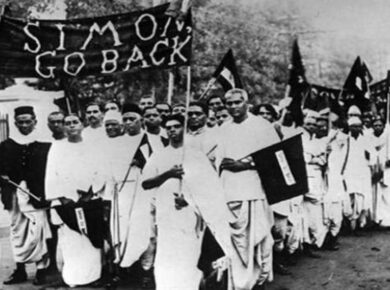
Anti Simon Commission Upsurge, Nehru Report & Demand for Purna Swaraj Lord Irwin (1926-31) Appointment of Simon commission in 1928 Passing of the resolution for complete independence (Purna Swaraj) in…
View Post
  • Modern India History
  • 3.5K views
  • 4 minute read
  • 7 comments

Revolutionary Terrorism During 1920s

  • IAS MANIA FAVICONAdmin
  • 13/05/2025
Revolutionary Terrorism During 1920s Sudden withdrawal of the Non-Cooperation Movement left many disillusioned; they began to question the basic strategy of nationalist leadership, since these younger nationalists were not attracted…
View Post
  • Modern India History
  • 8.1K views
  • 4 minute read
  • 3 comments

Swarajists and No Changers

  • IAS MANIA FAVICONAdmin
  • 13/05/2025
Swarajists and No Changers After Gandhi’s arrest (March 1922), there was disintegration, disorganisation and demoralisation among nationalist ranks. A debate started among Congressmen on what to do during the transition…
View Post
  • Modern India History
  • 7.2K views
  • 5 minute read
  • 2 comments

Emergence of Gandhi in India – Champaran, Kheda, Non Cooperation Movement

  • IAS MANIA FAVICONAdmin
  • 13/05/2025
Emergence of Gandhi in India – Champaran, Kheda, Non Cooperation Movement Champaran Satyagraha (1917) – First Civil Disobedience Movement Gandhi was requested by Rajkumar Shukla to look into the problems…
View Post
  • Modern India History
  • 2.7K views
  • 4 minute read
  • One comment

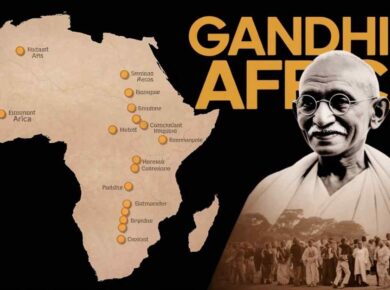
Emergence of Gandhi in Africa

  • IAS MANIA FAVICONAdmin
  • 13/05/2025
Emergence of Gandhi in Africa Mohandas Karamchand Gandhi was born on October 2, 1869 in Porbandar in the princely state of Kathiawar in Gujarat. Having studied law in England, he…
View Post
  • Modern India History
  • 3.6K views
  • 6 minute read
  • One comment

Indian National Movements (1905 – 1916) – First World War, Home Rule League & Montague-Chelmsford Reforms

  • IAS MANIA FAVICONAdmin
  • 13/05/2025
Indian National Movements (1905 – 1916) – First World War, Home Rule League & Montague-Chelmsford Reforms First World War & Nationalist Response In the First World War (1914-1919), Britain allied…
View Post

Posts pagination

1 2 Next

No Coding Required – #1 Web Hosting


UPSC/IAS Exams Preparation Books

UPSC Exam Books

General
  • Current Affairs
  • General Knowledge
  • Daily Latest News
  • Cricket Update
  • Best Websites for UPSC Preparation
  • Best Hindi Newspaper for UPSC
Recommended Books for UPSC
  • Books for UPSC Preliminary Exams (Eng)
  • Books for UPSC Preliminary Exams (Hindi)
  • Books for UPSC Main Exam (Eng)
  • Books for UPSC Main Exam (Hindi)
  • Books & Tips to Crack UPSC Interview (Eng)
  • Books & Tips to Crack UPSC Interview (Hindi)
History
  • World History
  • Ancient India History
  • Medieval India History
  • Modern India History
  • Post Independence History
CURRENT AFFAIRS
  • Current Affairs (Monthly)
  • Current Affairs For UPSC (Weekly)
  • Current Affairs For UPSC (Daily)


IAS Mania Logo

Advertise With Us

SUBJECTS
  • Biology
  • Economy
  • Ethics & Essay
  • IR & Security
  • Philosophy Optional
  • Social Issues
  • Polity
  • History
  • Art and Culture
  • Environment
  • Sci-Tech
PRELIMS & MAINS
  • Prelims Exclusive – 2022
  • Prelims Exclusive – 2021
  • Prelims Exclusive – 2020
  • Prelims Exclusive – 2018 & 2019
  • Mains Eclusive – 2018 & 2019
BOOKS FOR UPSC PREPARATION
  • Books for UPSC Preliminary Exams (Eng)
  • Books for UPSC Preliminary Exams (Hindi)
  • Books for UPSC Main Exam (Eng)
  • Books for UPSC Main Exam (Hindi)
  • Books & Tips to Crack UPSC Interview (Eng)
  • Books & Tips to Crack UPSC Interview (Hindi)
0
UPSC IAS Preparation and News Platform

© 2025 IASmania | All Rights Reserved. Designed & Developed by ON Time Infotech