Active Immunization
VACCINE
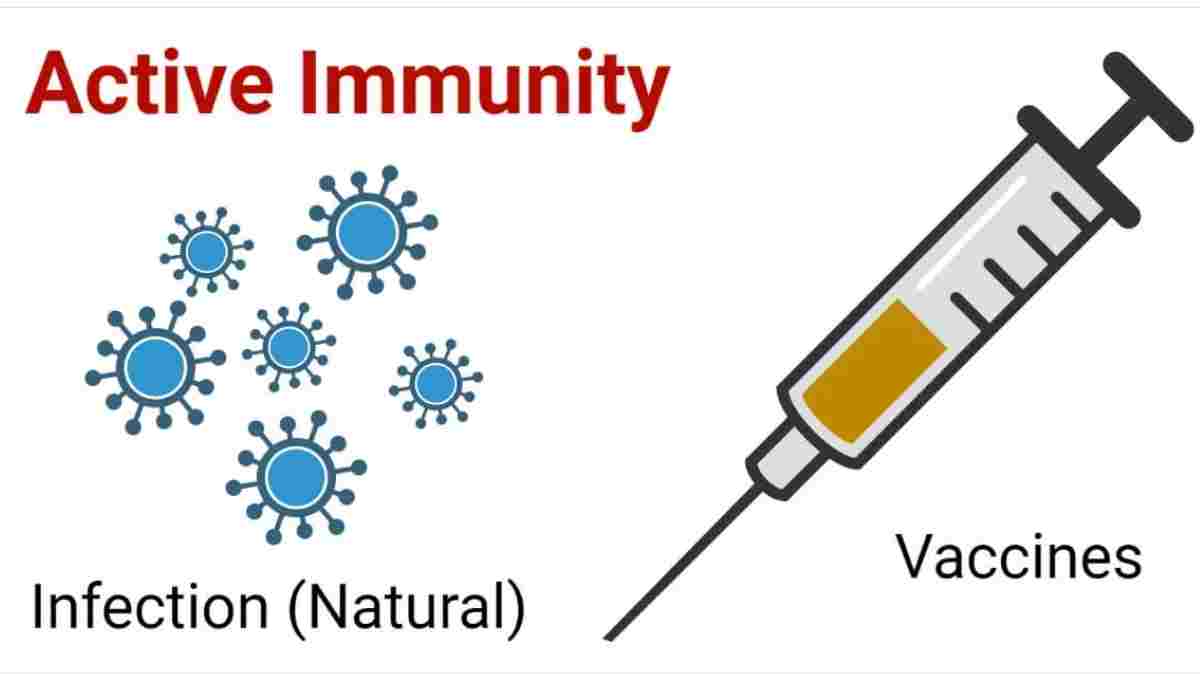
People had observed in the past that individuals who recovered from certain diseases are protected for life time from recurrences. This gave rise to the concept of immunization. Edward Jenner introduced vaccination in 1796 using cowpox to protect against smallpox.
The objective of vaccination is introduce the attenuated germs into the body. The body then generate specific population of memory cells. These memory cells can rapidly increase in number on the renewed contact with the same antigen and more antibodies can be produced to provide protection against infection.
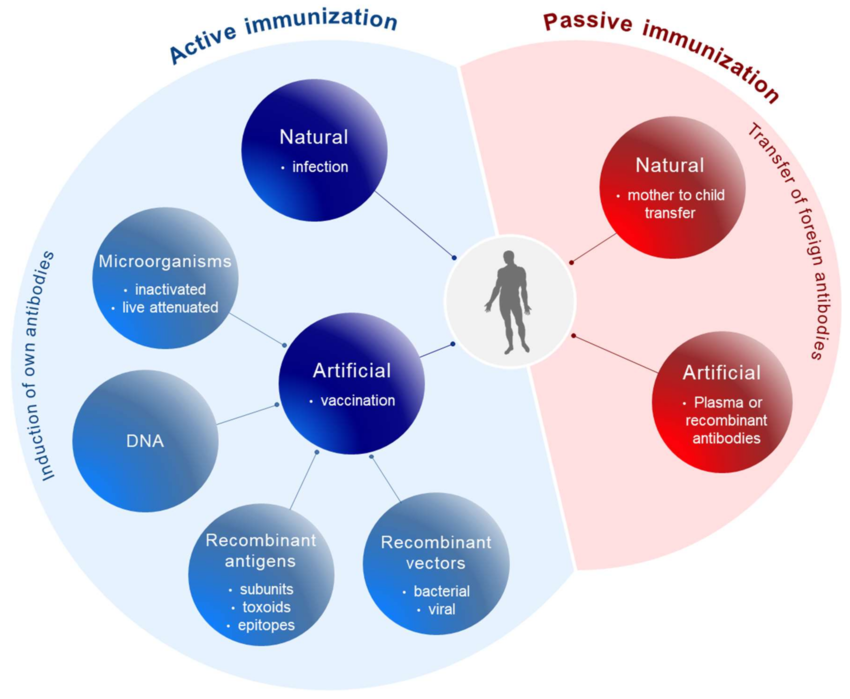
Types of Vaccine
Three main types of vaccines are available
1. Killed organisms as vaccines: e.g. typhoid, cholera, pertussis (whooping cough), rabies and poliomyelitis.
2. Live attenuated (weakened) organisms as vaccines: e.g. BCG, rubella, measles and polio.
Attenuation mimics the natural behaviour of the organism without causing disease. TL actively multiplying organism provides a sustained antigen supply.
3. Toxoid vaccines: e.g. diphtheria and tetanus. Toxoid is a chemically or physically modified toxin that is no longer harmful but retains immunogenicity.
Related Article: Types of Immunity
Important Vaccines – BCG, DPT and MMR
- BCG – Bacille calmette guerin (Calmette and Gueirn were the scientists who contributed in the development of tuberculosis vaccine).
- DPT – is triple vaccine (or antigen) for diphtheria and tetanus toxoids and for pertussis Bordotella pertussis, the whooping cough organism.
- MMR Vaccine – Attenuated strain of measles, mumps and rubella.
Another class of vaccines termed as polysaccharide. Vaccines are available comprising vaccines for influenza, meningitis and pneumonia. In these vaccines the relevant immunogenic portions of the organism are used.
Vaccines of future: against Malaria, Leprosy, Anthrax, AIDS.
For more updates, visit Scient Topics. Please share your thoughts and comments.
 Admin
Admin